Facts and figures
The programme at a glancePart of School



Programme information
What to expectHow to make an impact on one billion people
In this transformative one-semester programme, you will work through thematical weeks on Speculative Trend Watching, Design Psychology, Cross-Cultural Design, Creative User Research, Concepting, Business Modelling, and Exposition Design. You will learn how to navigate uncertainty, complexity, and cultural diversity while designing meaningful futures for a global audience.
Speculative innovation through a Network of Interpreters
The programme is grounded in Speculative Design, Cultural Design, Value Sensitive Design, and Innovation Design. To create radical innovations, you will actively build and engage your own Network of Interpreters (Verganti): a diverse group of experts, cultural insiders, creatives, and stakeholders who help you generate new meanings, challenge dominant perspectives, and enrich every stage of your design process. This approach supports the Rotterdam mindset: innovative, socially engaged, entrepreneurial, collaborative, and results oriented.
Design across cultures, contexts, and futures
Through methods such as speculative trend watching, giga mapping, cultural probes, non-human personas, extreme user scenarios, speculative scenarios, journey mapping, and business model canvassing, you will develop strong cross-cultural competencies. These skills enable you to design innovations that resonate across borders, value systems, and socio-cultural contexts, essential for global-scale impact.
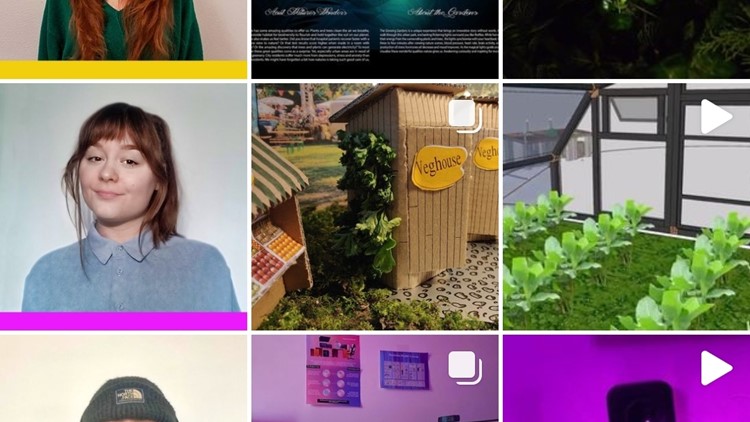
Would you like an impression of the speculative innovations created last year? This booklet(7MB) provides an overview.
Various Educational Methods
The course offers a comprehensive, practice-oriented programme designed to develop a design driven mindset. A variety of educational methods are employed, including (guest) lectures, tutorials, workshops, pressure-cooker sessions, co-creation activities, Dragons’ Den sessions, pitches, student curated exposition, field trips, and international excursions.
You will receive input, coaching, workshops, and feedback from leading experts in the field, senior lecturers from Rotterdam University of Applied Sciences, and international guest lecturers.
Students are expected to conduct research thoroughly and critically, applying both theoretical knowledge and practical skills across all modules.
Learning doesn’t stop in the classroom. As a group, you’ll organise field trips, cultural lunches, social events, and shared experiences that strengthen your network and broaden your worldview. You’ll also step outside the academic bubble by visiting exhibitions, design events, museums, and inspiring places such as Antwerp, , Cologne, Düsseldorf, Amsterdam, and Dutch Design Week in Eindhoven.
Type of assessment
In this programme, learning is hands-on and collaborative. Most assignments are completed individually, but you often work in small teams to brainstorm, exchange ideas, and gain new insights.
You will put theory into practice through exciting, real-world tasks. In the Design Driven Innovation 1 & 2 modules, you will be assessed on assignments, presentations, reflections and the planning and execution of workshops together with your peers.
The practice-focused modules, Convince the World and Make it Happen, are assessed through pressure cooker weeks, presentations and interviews, organising and presenting the student exposition, fieldtrips, classroom participation and producing a final reflection report.
There are no written exams, assessment is based on your creativity, practical skills, teamwork, and ability to turn ideas into meaningful speculative innovations.
Since Europe is on our doorstep ... next to taking classes, workshops and participating in pressure cookers, you will also look beyond our borders by going on fieldtrips to for example Antwerp, Brussels, Dusseldorf and Cologne. You can contact main lecturer Saskia Best for further details.
If you have successfully completed this exchange programme then you are able to:
- Analyse how speculative innovations are developed and map relationships between innovations, contexts, and meanings.
- Apply a range of design research methods to translate insights into speculative and design driven concepts.
- Create and strategically engage a Network of Interpreters to formulate a vision for new speculative concepts.
- Define and apply design principles that underpin speculative design driven innovation.
- Design in and for cross-cultural contexts, demonstrating cultural awareness and sensitivity.
- Develop and communicate credible speculative prototypes that embody a speculative design driven innovation concept.
- Present, defend, and critically evaluate speculative design driven innovation concepts individually, using well-reasoned arguments and reflective judgment.
|
Planning Fall 2026-2027 |
|
|
Block 1 |
|
|
Week 1 |
Being a cultural sensitive innovator |
|
Week 2 |
Speculative Trendwatching week |
|
Week 3 |
Make week |
|
Week 4 |
Cross cultural/Inclusive Design Week |
|
Week 5 |
Your inside out Innovation Week |
|
Week 6 |
Your Speculative Innovation Week |
|
Week 7 |
Synthesis Week |
|
Fall Break |
|
|
Week 8 |
Deliver Week |
|
Block 2 |
|
|
Week 9 |
Business Week 1 |
|
Week 10 |
Business Week 2 |
|
Week 11 |
Prototyping Week |
|
Week 12 |
Storytelling Week |
|
Week 13 |
Expo Design Week 1 |
|
Week 14 |
Expo Design Week 2 |
|
Week 15 |
Showtime Week |
|
Christmas Break |
|
|
Week 16 |
Wrap-it up Week |
|
Week 17 |
Cultural Encounter Week |
|
Week 18 |
Resit Week |
After completing your exchange programme at Rotterdam University of Applied Sciences, you will receive a:
- Transcript of records
Subjects
An indication of the subjects you can expect
Block 1
-
Design Driven Innovation 1 (7 ECTS)
Design Driven Innovation 1 (7 ECTS)
Topics
- Speculative Trendwatching
- Innovation Theory
- Experimenting in the Maker Lab
Learning materials
Books and handouts
Learning outcomes
- Develop speculative future scenarios
- Apply Verganti’s framework to develop real-world speculative innovation cases
- Translate conceptual ideas into tangible prototypes.
Type of assessment
- Pressure Cooker
- Presentation
- Report
-
Convince the World (practice): 8 ECTS
Convince the World (practice): 8 ECTS
Topics
- Cross cultural Communication
- Synthesis Wall
- Network of Interpreters
- Creative Ideation
Learning materials
Handouts and workbook
Learning outcomes
- Engage in opportunities for cross-cultural interaction with those who differ from you in beliefs, behaviors, values, or views
- Identify and map relevant interpreters (Verganti)
- Translate research insights into opportunity a design direction for a speculative innovation
- Apply structured ideation techniques
Type of assessment
- Pressure Cooker
- Presentation
- Interview
- Reflection
Block 2
-
Design Driven Innovation 2 (7 ECTS)
Design Driven Innovation 2 (7 ECTS)
Topics
- Business modelling
- Value proposition
- Minimum Viable Product
- Storytelling
Learning materials
Handouts and workbook
Learning outcomes
- Design a viable business model for a speculative design-driven innovation.
- Reflect critically on the societal, ethical, and long-term impact of the proposed business model.
- Use storytelling techniques to communicate speculative and meaningful innovation concept.
Type of assessment
- Pressure Cooker
- Presentation
- Interview
- Reflection
-
Make it Happen (practice): 8 ECTS
Make it Happen (practice): 8 ECTS
Topics
- Expo design
- Prototype testing
- Individual classroom participation
- Evaluating final speculative innovation
Learning materials
Handouts and workbook
Learning outcomes
- Conceptualise, design, and present a professional and engaging exhibition booth.
- Communicate the process and outcomes of a speculative innovation project in a clear, structured, and professional manner to a diverse audience.
- Develop and test a high-fidelity prototype of the speculative innovation, systematically collecting and analysing user and stakeholder feedback.
- Critically reflect on own design practice, decision-making processes, and professional development.
Type of assessment
- Exposition
- Presentation
- Reflection
Practical matters
What you need to knowLocation
Where you can find us